

Padel · Gear
Which Padel Racket Should You Choose for Your Level?
The right racket depends less on the brand than on your level and your game. Here is how to read a product sheet, then which shape to pick at each level from 1 to 8.
Scan to get the appPoint your phone's camera at it.
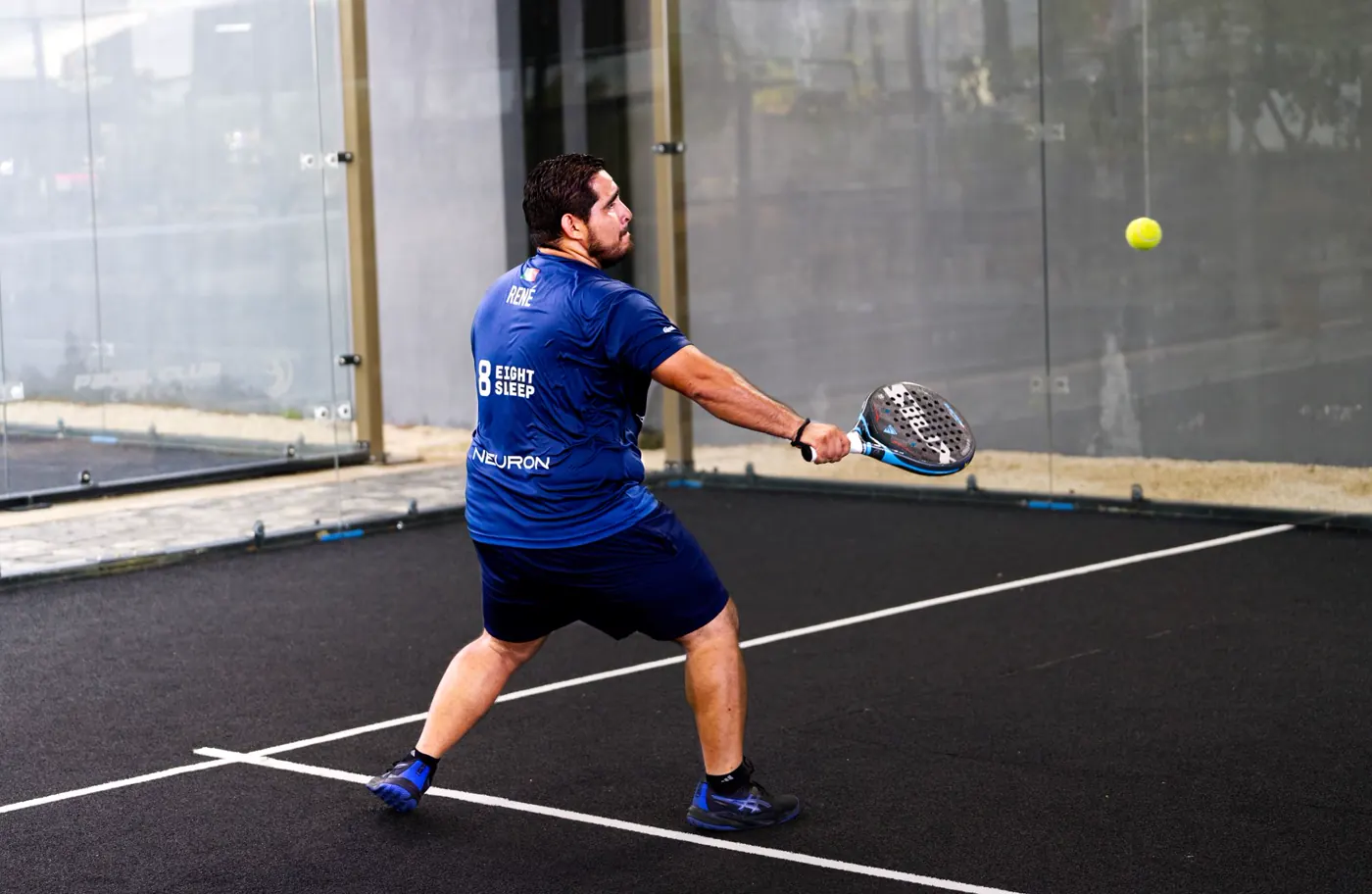
Round, teardrop, diamond: the 3 shapes
| Shape | For | What it gives | Good to know |
|---|---|---|---|
| Round | Beginners, control players | Large central sweet spot, balance towards the handle: forgiving and easy to handle | Less power on smashes |
| Teardrop | Improving players, all-rounders | A compromise between control and power | Versatile: suits most players |
| Diamond | Confident players, attackers | Balance towards the head: more power on smashes | Smaller sweet spot, more strain on wrist and elbow |
Which racket at each level
General guidance based on the CourtSync 1–8 scale. Always try before you buy: many clubs lend demo rackets.
| Level | Shape | Core and face |
|---|---|---|
| Levels 1–2 | Round | Soft core, fibreglass: the ball comes off easily |
| Levels 3–4 | Round or teardrop | Medium core, fibreglass or carbon |
| Levels 5–6 | Teardrop | Stiffer if you want precision |
| Levels 7–8 | Teardrop or diamond | Stiff carbon, depending on your side and stroke |
Reading a product sheet
- Weight: 300 to 370 g depending on the model, according to the French federation. Lighter is easier to handle; heavier is more powerful but harder on the arm.
- Balance: towards the handle, quick to handle; towards the head, hits harder.
- Core (foam): soft helps the ball come off; hard gives more control to players who hit hard.
- Face: fibreglass is soft and comfortable, carbon stiffer and more precise.
- Texture: the rules allow a smooth or rough face; a rough face helps with spin.
What the rules say
Under the French federation's padel rules: at most 45.5 cm long, including up to 20 cm of handle, 26 cm wide and 38 mm thick. The wrist strap is compulsory in competition. You may change racket during a match, not during a point.
Frequently asked questions
Which padel racket for beginners?
A round racket with a soft core and a fibreglass face. Its sweet spot is large and central, so off-centre hits still work. Avoid the diamond shape at first: it is harder to control.
Round, teardrop or diamond: what is the difference?
Round: balance towards the handle and a large sweet spot, for control and forgiveness. Teardrop: a compromise between control and power. Diamond: balance towards the head, more power on smashes, but a smaller sweet spot and more strain on wrist and elbow.
How heavy should a padel racket be?
The French federation gives 300 to 370 g depending on the model. Lighter is quicker to handle and easier on the arm; heavier gives more power but loads the shoulder and elbow more. If unsure, take a mid weight and try before you buy.
Is carbon better than fibreglass?
Not for everyone. Carbon is stiffer: more precision and power with a clean stroke, less comfort. Fibreglass is softer: the ball comes off more easily at a beginner's swing speed.
What racket dimensions are allowed?
Under the French federation's rules: at most 45.5 cm long, including up to 20 cm of handle, 26 cm wide and 38 mm thick. The wrist strap is compulsory in competition.
How do I know my level before buying?
Take CourtSync's free level test: in 7 questions it places you on the 1–8 scale, and this guide tells you which racket shape goes with it.
Know your real level.
Take the 7-question test in the app, then let your ranked matches move your rating. Free on iOS and Android. Optional Pro at €4.99/month adds court alerts and advanced stats.


Scan to get the appPoint your phone's camera at it.